The Job Is Never the Product: How True Leaders Compete by Empowering

Author
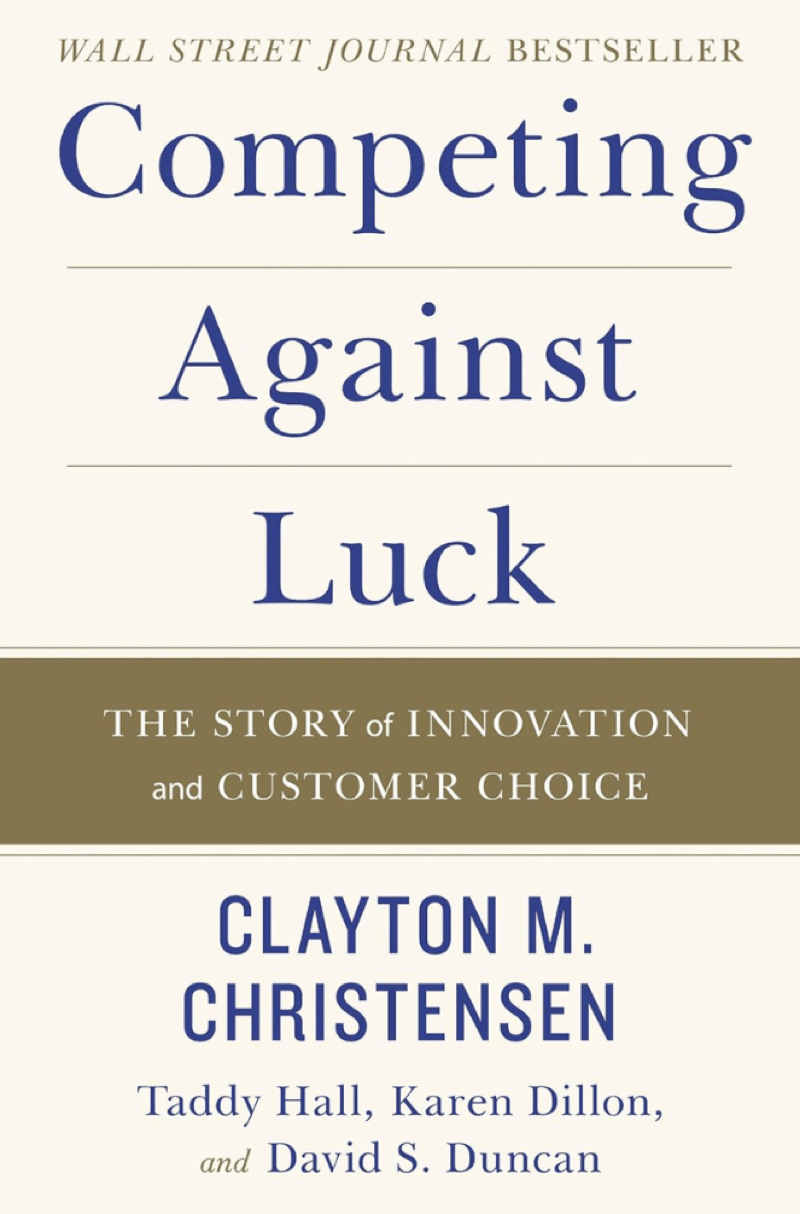
Soul FounderThere’s a quiet genius in Clay Christensen’s work. He didn’t just study innovation—he listened to it. In Competing Against Luck, he gave voice to something many business leaders feel but struggle to articulate:
People don’t buy products.
They hire them to do a job.
And when you understand the job, everything changes.
This is not a marketing insight. It is a human one.
Because what Christensen really revealed is that beneath every purchase lies a longing. A hope. A transformation waiting to happen.
The Real Market Is the Inner Life
A parent doesn’t buy a milkshake for nutrition. They buy it to create a small moment of peace on the drive to school. A commuter doesn’t choose an app for its features—they choose it because it helps them feel on top of their life.
The product is incidental. The job is everything.
Christensen saw this clearly: the companies that win in the long term are not the ones who build better products, but those who deeply understand the progress their customers are trying to make in their lives—and help them make it.
This is the true purpose of business: to enable transformation. And when you begin to see things this way, a larger truth reveals itself.
Empowerment Is the Business Model
To serve someone well, you must know what they’re struggling with. To know what they’re struggling with, you must listen.
And once you listen, truly listen, you begin to care.
And if you care—and you have the tools—you build something not just to sell, but to support. Not just to deliver, but to guide. That’s what the best companies do. They empower.
They don’t just sell the hammer. They teach you how to build the life you imagined.
They don’t just sell software. They help you become more confident, capable, and in control.
They don’t just offer transformation—they walk it with you.
This is the energy of the Empowerment Platform. And it is the living expression of Jobs to Be Done.
The Danger of Forgetting the Job
Many companies drift from this insight.
They become obsessed with features, metrics, and internal processes. They optimize funnels, map segments, expand roadmaps—yet somewhere along the way, they forget to ask the most important question:
What job are we really being hired to do in this person’s life?
When that question is forgotten, the customer becomes distant. The work becomes mechanical. Innovation slows. And no amount of marketing or management can fill the gap.
Because the customer didn’t come for a product.
They came for a shift.
A better version of themselves.
A better moment.
A better life.
To lead tomorrow, you must design your company around that. Nothing less.
Technology With Intention
Now, for the first time, we have the tools to design around the full journey of transformation.
With AI, we can hold complex context across vast systems. We can speak to each customer, and each team member, in ways that make sense to them. We can design around purpose—not just process.
But that technology must be led by care. Otherwise, we automate disconnection.
This is where the cultural and technological shifts converge. Because the market is waking up. People want to be seen. Understood. Helped. Not nudged, not optimized—empowered.
The companies that embrace this—who understand that the real product is progress, and the real progress is human—will be the ones that lead.
A New Era of Jobs to Be Done
Christensen showed us that transformation is the axis of true innovation.
The Empowerment Platform brings that insight to life.
It gives businesses a way to operationalize understanding. To embed care into every touchpoint. To see the customer not as a transaction, but as a human on a journey—and to walk beside them, every step of the way.
This is not idealism. It is strategy.
Because in the long run, the market rewards what the soul recognizes.
“Help me become who I’m trying to be,” the customer says.
And the company that listens—and answers—wins.
Not just for a quarter. For a generation.